
Costa Rica

Suitable venues and facilities for the conference session for about 300 participants
In San José, Costa Rica, the Costa Rica Convention Center offers an ideal venue for the conference. Conveniently located near major hotels and the international airport, the center ensures easy access for all attendees. The facility features a main hall with a capacity for up to 4,000 people, making it well-suited for large-scale events. Its modular and flexible design allows for the use of smaller, adaptable spaces that are perfect for breakout sessions, workshops, and meetings of around 300 participants.
Costa Rica is easily accessible from countries in the region and around the world. Its modern Juan Santamaría International Airport is connected to other Central American countries by two regional airlines (Avianca and Copa), and to North America by Aeromexico, Air Canada, American Airlines, Delta, United, and Volaris. Additionally, Avianca, Copa, GOL, and Wingo offer connections to South America. Five European airlines serve San José directly: Air France, Edelweiss Air, Iberia, KLM, and Lufthansa. Access from Australasia is available via major U.S. hubs such as Los Angeles and Dallas. A large majority of nationalities can enter Costa Rica without a visa, provided they hold a valid passport, a return ticket, and do not plan to stay longer than 90 days (details: Entry Requirements - Visit Costa Rica - Guidelines).
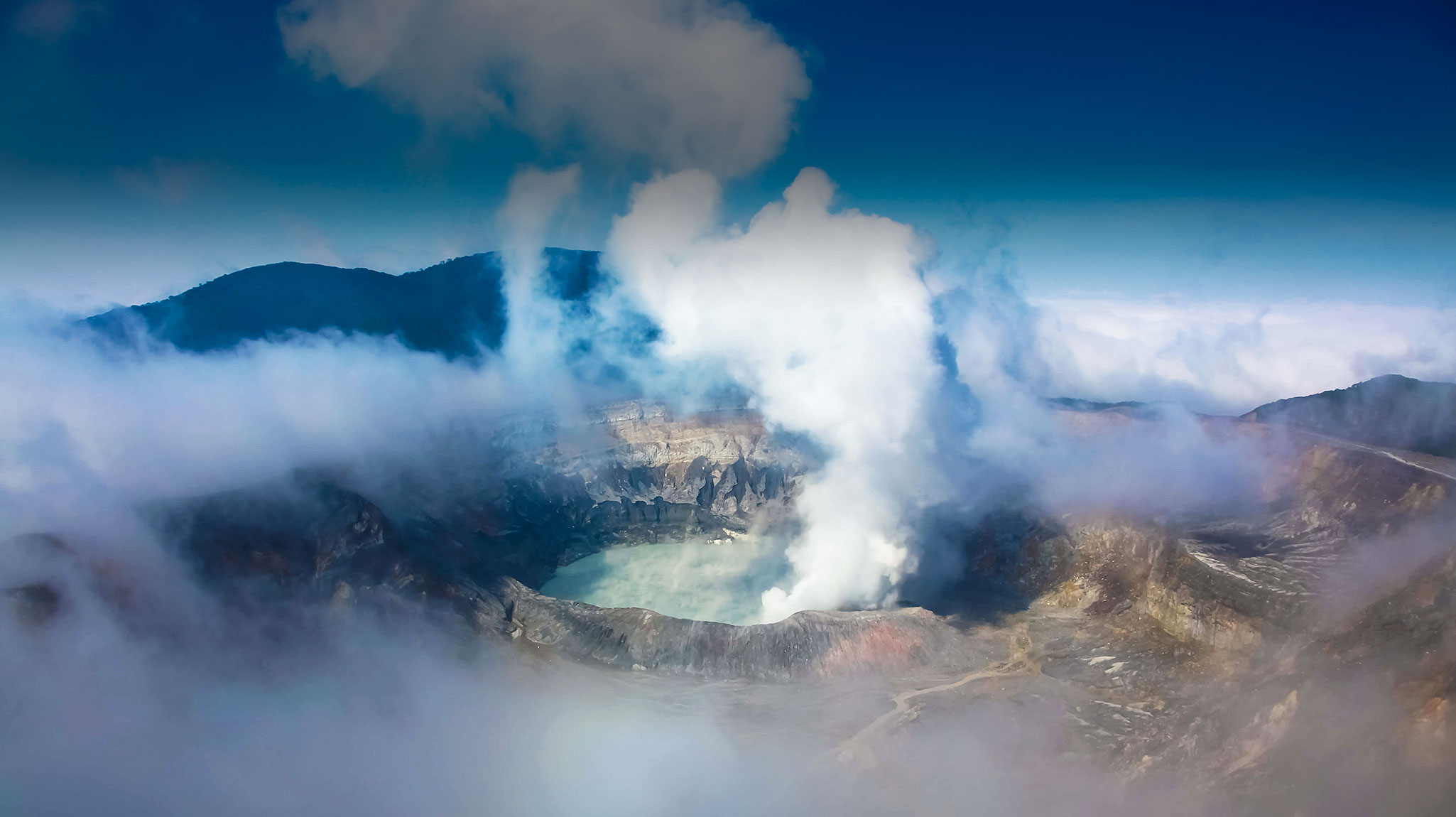
Welcome to Costa Ric
What the country can offer
Costa Rica, located in Central America and bordered by both the Pacific Ocean and the Caribbean Sea, boasts a unique geographic position and varied topography that give rise to a remarkable diversity of microclimates, habitats, rich biodiversity, and abundant water resources. Coastal regions experience average temperatures ranging from 25°C to 27°C, while mountainous areas average around 22°C. The country receives an average of 3,500 mm of rainfall annually, resulting in a per capita water availability of 23,666 m³. With a territory spanning 51,000 km², Costa Rica is home to 34 hydrographic basins and 58 aquifers, highlighting its vast freshwater potential.
As of 2023, Costa Rica reported a GDP of $86.5 billion and has set aside approximately 25% of its national territory for nature conservation. These protected areas, which shelter an estimated 5% of the planet’s biodiversity, are critical for the protection of water resources, the preservation of ecosystem services, and the promotion of human well-being.
In terms of water access and public health infrastructure, Costa Rica guarantees 100% access to potable drinking water for the urban population and 92% for the rural population. Moreover, 91% of the population has access to basic sanitation services. These achievements are exceptional in the Latin American context and place the country among the few that have already met the targets of Sustainable Development Goal 6 (Clean Water and Sanitation). With these advances, Costa Rica is well-positioned to share its experience in integrated water management and contribute meaningfully to international dialogue on water security and public health.
Hosting a WaterMicro event in Costa Rica represents a strategic opportunity to strengthen research and foster collaboration in water microbiology across Latin America. The country’s robust and well-connected air travel infrastructure makes it easily accessible, providing an ideal setting for researchers and professionals to convene, share knowledge, and establish partnerships that drive scientific advancement and promote sustainable water management practices.
Things to consider before your trip to Costa Rica
Drinking Water
Water is drinkable throughout most of the country. However, we recommend drinking bottled water, especially in areas near the coast
Currency and Credit Cards
The Costa Rican currency is the colón. US dollars and credit cards are used in almost all establishments in the country. Most major credit cards are accepted. You'll also find ATMs throughout the country.
Electrical Adapter
Our electrical system handles 110 volts, with a standard 2-prong plug.
Climatology
To learn about the weather conditions during your stay in our country, we suggest you visit the Costa Rica Meteorological Institute website at the following link.
More information
Visas
Depending on your nationality, you may be able to enter the country without a visa. Those holding passports from the United States, Canada, and most European countries are eligible for this privilege.
More information
Departure tax
The departure tax is USD 29, payable in dollars, colones, or by credit card. As of June 2015, several airlines have already charged this tax on your ticket; we suggest you check with your airline.

Yellow fever vaccine
In Costa Rica There is NO yellow fever
However, to enter Costa Rica, it is mandatory to present the International Certificate of Vaccination against Yellow Fever if you come from countries with a risk of active transmission of this disease. This measure applies to both foreigners and Costa Ricans who have been in these countries in the last six days.
Countries that require the yellow fever vaccine to enter Costa Rica:
South America and the Caribbean: Bolivia, Brazil, Colombia, Ecuador, Guyana, French Guiana, Paraguay, Peru, Suriname, Venezuela, Trinidad and Tobago.
Africa: Angola, Benin, Burkina Faso, Burundi, Cameroon, Central African Republic, Chad, Republic of the Congo, Democratic Republic of the Congo, Ivory Coast, Equatorial Guinea, Ethiopia, Gabon, Gambia, Ghana, Guinea, Guinea-Bissau, Kenya, Liberia, Mali, Mauritania, Niger, Nigeria, Senegal, Sierra Leone, Sudan, South Sudan, Rwanda, Tanzania, Togo, Uganda, Zambia.
This list was made official by Ministerial Resolution No. DM-RC-2214-2024 and entered into force on March 11, 2025.
More information
00
Días
00
Horas
00
Minutos
00
Segundos